Hedge Trimming in Temple

Hedge Trimming Temple is focused on neat, careful hedge cutting for domestic gardens and managed outdoor spaces in the local area. The work is about more than a quick tidy-up: it is a way to keep boundaries, shape, and growth under control while supporting a healthy, even finish. Our service is suited to routine trimming, seasonal reduction, and restoration of hedges that have started to lose their form.
We work on hedges where a clean profile matters, whether the aim is to sharpen a formal line, keep a boundary dense, or bring a looser hedge back into a more manageable shape. The approach is practical and measured, with attention to the species, the current condition of the hedge, and the level of cut needed. Good hedge trimming preserves structure while avoiding unnecessary stress on the plants.
For a clearer idea of how the service is arranged, you can read more about our services overview and then contact us to request a quotation. If you already know the style of finish you want, a short description is enough to start the conversation.
Regular Hedge Maintenance
Routine hedge trimming helps prevent fast-growing plants from becoming difficult to manage. In many gardens, the most useful schedule is based on the growth habit of the hedge rather than a fixed date, so the cut can be light, consistent, and easier to maintain from one visit to the next. Regular maintenance also keeps paths, driveways, and shared boundaries from being narrowed by overgrowth.
Some hedges are best kept tightly clipped, while others benefit from a softer outline with a little more growth left in place. We consider the required finish, the hedge’s purpose, and any nearby features before shaping the work. A boundary hedge may need height control as well as a straight face, whereas ornamental hedging may need a more exact profile and a cleaner visual line.
Our trimming service can support a wide range of common hedge types, including informal garden screening and more formal perimeter planting. Where useful, we can also combine the work with broader garden maintenance so the hedge sits comfortably alongside the rest of the outdoor space. The right cut at the right time often makes the next trim simpler and more predictable.
Shaping, Height Reduction and Form
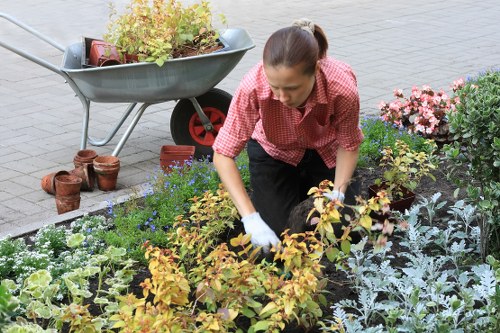
Some hedges need more than standard side trimming. If a hedge has outgrown its intended line, a careful reduction can restore proportion without leaving the plant looking harsh or uneven. Height work needs to be controlled and realistic, because removing too much at once can affect both appearance and recovery. The aim is to shape with restraint and leave a finish that still looks natural for the species.
Different hedge forms call for different methods. Straight formal hedging usually benefits from precise vertical faces and a level top, while softer garden hedges may need gentler tapering to allow light lower down. If you want a neater border, a stronger privacy screen, or a tidier outline beside a lawn or path, the cut can be adjusted to suit the setting. Consistency matters when the hedge forms part of a visible front garden or boundary line.
For hedges that have become awkwardly wide, we can discuss whether a staged approach is more suitable than a single heavy cut. That kind of planning helps protect the shape of the hedge and avoids leaving gaps that take a long time to fill in. You can review pricing and quotes information before asking for a quotation if you want to understand how the work is usually assessed.
Boundary Hedges, Privacy and Access
Boundary hedges often need a balance between appearance, privacy, and practical access. A hedge beside a driveway, footpath, or shared edge can drift into circulation space if it is not kept trimmed back. In these situations, the finish has to be neat but also considerate of gates, fences, and nearby structures. We focus on a result that looks intentional rather than simply reduced.
Privacy hedges are usually cut with a slightly different objective from decorative hedges. The emphasis is often on density, height control, and an even outer line so the hedge continues to screen views effectively. Where a hedge has gaps, lean, or irregular growth, the trimming can be set out to improve shape without pushing the plant beyond what is reasonable for its condition. Relevant work on broader boundaries can also sit alongside landscaping where that is part of the wider garden plan.
A practical hedge cut also helps with day-to-day access for mowing, edging, and general use of the garden. If a hedge is affecting a gate opening, narrowing a route, or casting too much bulk over a border, that can usually be addressed as part of the same visit. Clear access and a defined edge often make the whole space feel more orderly.
Seasonal Cuts and Growth Control

Hedges do not grow at the same rate throughout the year, so the timing and intensity of trimming can make a noticeable difference to the finish. A lighter seasonal cut may be enough for a hedge that is already in good form, while a more substantial tidy-up may be useful after a burst of growth. The objective is to reduce excess growth without creating a rough or stressed appearance.
Seasonal work is often chosen when gardeners want to keep a hedge within agreed limits before it becomes awkward to handle. In practice, this means dealing with the outer growth, the top line, and any shoots that disrupt the overall shape. The result is usually easier ongoing maintenance, because the hedge is brought back into a manageable form before the next growth cycle builds up again.
If you are comparing service options, it can help to think about whether you need a simple tidy, a return to shape, or a more structured reduction. Some customers also want wider garden work arranged at the same time, and our garden clearance page explains another useful option where overgrowth and cut material need to be dealt with together. A short note about hedge height and access points is usually enough to start.
Hedge Types and Cutting Considerations
Different hedges respond differently to trimming, and the cut needs to suit the plant rather than forcing every hedge into the same outline. Faster-growing varieties may need more frequent attention to hold their shape, while slower-growing hedges benefit from a more cautious approach. We take a sensible view of the species, current density, and likely recovery before deciding how much to remove.
Some hedges are maintained primarily for a crisp formal look, while others are valued for their natural screening or wildlife-friendly structure. Where a softer appearance is important, the cut can be kept less severe and the outline allowed to read as part of the planting rather than a hard architectural line. In more precise settings, straight edges and even top lines may be the main goal. Either way, the work is aimed at a clean and balanced result.
When hedges have become uneven, one side may need more attention than the other, or the top may be fuller than the lower sections. That sort of variation is common and does not necessarily call for a complete overhaul. A measured cut often gives the best balance between appearance and plant health. For larger tree-related work, our tree lopping and removal page covers a different type of outdoor maintenance entirely.
Getting the Hedge Ready for Work
Before a quotation is prepared, it helps to think about the basic shape of the hedge and the level of access around it. A few clear details about approximate height, length, and whether both sides are reachable can make it easier to judge the scale of the job. If there are tight passages, delicate paving, or obstacles close to the hedge, that is useful to mention as well.
Photos can be helpful when a hedge is difficult to describe, particularly if it has multiple sections or different heights along the same boundary. If there are gates, restricted areas, or shared edges, those details help to set expectations about how the work is likely to be approached. Keep the information simple and practical; it is the structure of the hedge and the surrounding access that matter most. A concise enquiry is often enough to get things moving.
Simple preparation notes:
- Measure or estimate the hedge length if you can.
- Note whether the hedge is one-sided, two-sided, or boundary shared.
- Tell us if height reduction is needed as well as trimming.
- Mention any access limits, locked gates, or fragile features nearby.
- Include clear photos if the hedge is tall, uneven, or heavily overgrown.
Workload, Access and Quotation Factors

Several practical factors can affect how a hedge trimming job is assessed. The length of the hedge, the height to be reached, and the amount of reduction needed all influence the scale of the task. Access matters too, because a hedge that can be worked from open ground is different from one that sits behind planting, along a narrow run, or next to surfaces that need extra care.
The condition of the hedge is also important. A hedge that has been trimmed regularly is usually simpler to shape than one that has been left to bulk up for several seasons. Irregular growth, mixed species, and previous hard cutting can all affect how the work is planned. Where there is a need to maintain symmetry or keep a very specific line, that adds to the precision required. We keep the focus on the hedge itself and the result the customer wants.
If you are comparing options for wider outdoor work, a related service such as landscape gardening may be relevant where the hedge forms part of a broader layout. For straightforward trimming, the quotation stage is usually best kept to the essentials: what is being cut, how much reduction is needed, and how easy it is to reach. That is generally enough to produce a sensible estimate.
About Temple
Temple is a district in the City of Bristol, lying close to the centre and shaped by its long relationship with the River Avon and the transport corridors that pass through the eastern side of the city. The name is closely associated with the former Knights Templar estate, and later with Temple Meads, the area that became one of Bristol’s key railway gateways. The surviving urban fabric reflects that layered past: there are traces of older routes, commercial premises, railway land, and modern development all within a relatively compact area. Bristol Temple Meads station, with its celebrated historic railway architecture, is one of the best-known landmarks linked to the district, and it has helped define Temple’s role as a place of movement and arrival for well over a century. The nearby waterways, bridges, and busy streets give the area a distinctive character, while the wider inner-city setting connects it to the rest of Bristol’s civic, business, and cultural life. Although Temple is not a large suburb with extensive green open space, it sits within easy reach of the city’s parks, harbourside routes, and public realm, making it part of a densely layered urban landscape. Its identity comes from that mixture of medieval origins, industrial and railway history, and continuing regeneration rather than from one single landmark alone.
Garden Maintenance with Hedge Trimming
Many customers prefer hedge trimming to sit alongside broader garden care so that the outdoor space looks coherent rather than partly finished. Where the hedge borders lawns, beds, or paved areas, it often makes sense to keep the surrounding planting tidy at the same time. That can mean combining routine cutting with edging, light shaping, or other seasonal work so the hedge sits properly within the rest of the garden.
We also consider how the hedge relates to the rest of the planting. A tidy hedge can frame a lawn, define a path, or provide a backdrop for borders, but it should not dominate the whole layout. If the hedge is part of a more detailed garden plan, trimming can be used to reinforce lines and support a cleaner overall look. A well-managed hedge should feel integrated, not isolated from the rest of the space. For customers looking at regular upkeep, our lawn mowing page shows another service that can be paired with hedge care where needed.
It is also sensible to think about what the hedge is there to do. Screening, decoration, shelter, and boundary control all suggest slightly different trimming priorities. A hedge beside a patio may need a more refined finish than one at the back of the garden, while a hedge used mainly for privacy may need a firmer focus on coverage. The best result is one that matches purpose, not just one that looks cut in the moment.
Request a Quotation

If you need hedge trimming in Temple, the easiest next step is to ask for a quotation with a brief description of the hedge and the result you want. Include the hedge location, approximate size, and whether you need light trimming, reshaping, or a more involved reduction. If there are several hedges on the property, it helps to note that too, so the work can be considered properly.
Where useful, mention any access issues, nearby planting, or areas that should be protected during the cut. That makes it easier to understand the practical side of the job and to judge what is involved. If you are ready to talk through the work, send the details now and we can help you move toward a quotation. For direct enquiries, please use our contact us page.
For customers who want a wider view of what is available, our services overview can be a useful starting point before making contact. Whether the hedge needs a light seasonal tidy or a fuller return to shape, we are ready to discuss the job and prepare a quotation that reflects the work involved.